A Bamboo Salt Lick Holder for Our Goats
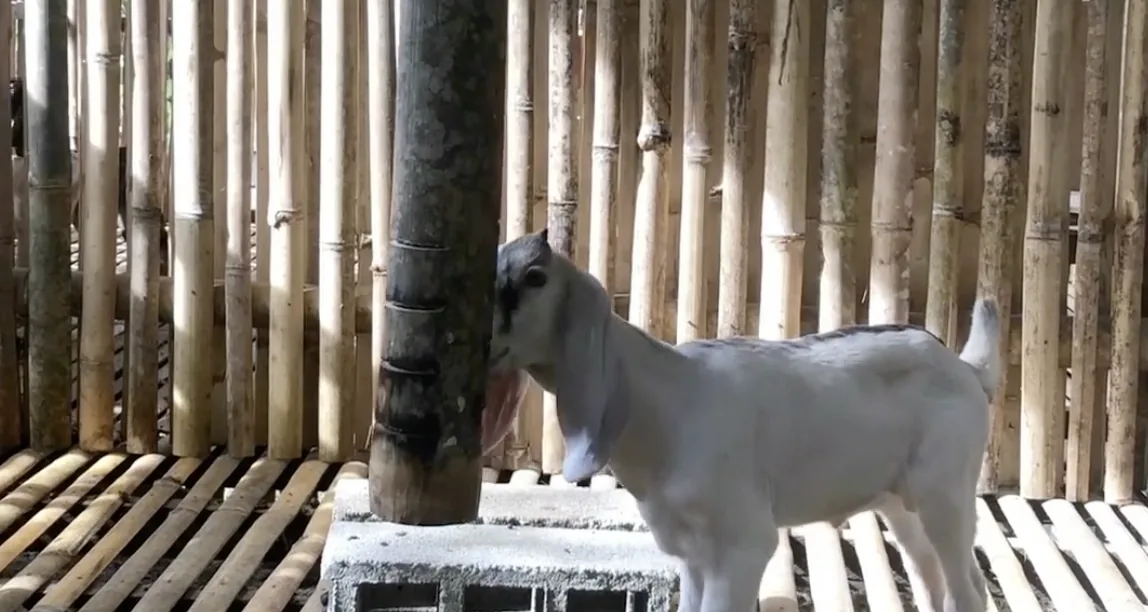
Our goats need more than grass, leaves and concentrates. They also need regular access to salt and minerals.
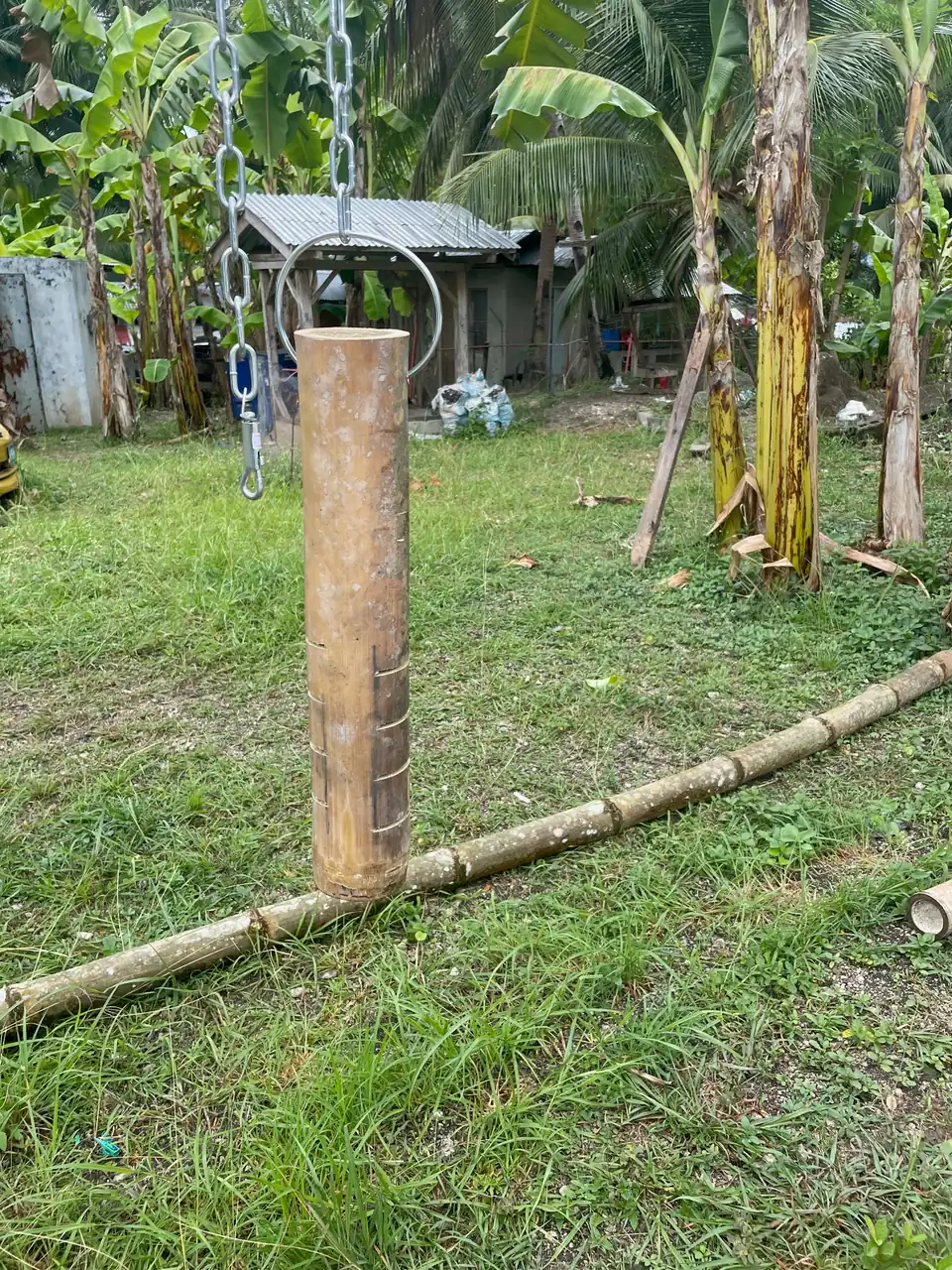
Commercial holders are available, but this was a simple problem we could solve with material already growing around us. We made a salt lick holder from a single section of bamboo and suspended it inside the goat house.
It is a small project, but every part of it has a reason.
Why We Give Our Goats Salt and Minerals
Salt helps support normal body functions, while a suitable mineral supplement can provide trace minerals that may not always be present in sufficient amounts in the rest of the ration.
This matters especially for productive animals. Our broader feeding programme combines home-grown forage with concentrates, soybean meal, pollard and mineral supplementation. We described that system in Healthy Goats Are Happy Goats.
The bamboo holder gives the goats access to a salt and mineral mixture without placing it loose on the floor, where it could become dirty or be wasted.
We can also combine the salt with an appropriate mineral supplement. This helps us provide important trace minerals, including copper and selenium, as part of the mineral support we still buy for the herd.
Mineral requirements and tolerances differ between animal species, so the supplement still needs to be suitable for goats. The holder itself does not determine the correct mineral balance. It simply provides a practical way to offer the mixture.
How the Bamboo Holder Works
We selected a section of bamboo with one natural node still intact near the bottom.
That node forms a built-in floor. It closes the tube naturally and prevents the salt mixture from falling straight through.
We then cut several slots into the lower part of the bamboo. The goats can reach the salt through those openings with their tongues.
As they lick, the surface becomes slightly moist and a small amount gradually dissolves. The goats take in the salt and mineral mixture little by little rather than pulling out a large loose piece.
The solution is simple because the structure of the bamboo already does most of the work.
Junyard was quick to investigate the new holder. The short video below shows how a curious goat interacts with it in practice.
Why We Used Stainless Steel
Salt and moisture are not friendly to ordinary steel.
For that reason, we deliberately used a stainless-steel chain and metal fittings. Stainless steel is far better suited to this environment because it is less likely to rust when exposed to salt and humidity.
That matters in the Philippines, where the air is already humid and the holder may also be exposed to moisture from the goats themselves.
The chain allows the holder to hang freely while keeping it off the floor.
Why We Chose Chain Instead of Rope
A rope would have been easier, but it would also have created new problems.
Goats are curious animals. They investigate objects with their mouths and may chew on anything they can reach. A rope could eventually be damaged or bitten through.
Many ropes are also made partly or entirely from synthetic materials such as nylon. We do not want pieces of nylon ending up in the goats’ stomachs.
A stainless-steel chain is stronger, harder to damage and better suited to a salt-rich environment.
It costs more than a piece of rope, but it should also last considerably longer.
A Small Solution Made From Local Material
This bamboo salt lick holder is not a complicated piece of equipment.
It is simply a section of bamboo, selected with the right natural node, given a few openings and hung from a durable chain.
That is exactly why it fits De Klomp.
We prefer to use what is already available when it can do the job properly. Bamboo grows locally, the natural structure gives us a ready-made container, and the stainless-steel chain provides the durability the application requires.
The result is inexpensive, practical and easy for the goats to use.
It also connects naturally with the wider system we are building around our herd. Their forage comes from Napier, browse and our developing feeding forest. Their nutritional needs are supported with carefully selected supplementary feeds and minerals. The holder is simply one more practical part of that complete system.
Sometimes the best homestead solutions are not complicated machines.
Sometimes they are just a piece of bamboo used in the right way.
Enjoyed this story?
If you know someone who enjoys homesteading, goats, traditional food, or self-sufficiency, feel free to share it.
Related stories from De Klomp
More from the homestead about food, goats, growing, and building a resilient life.
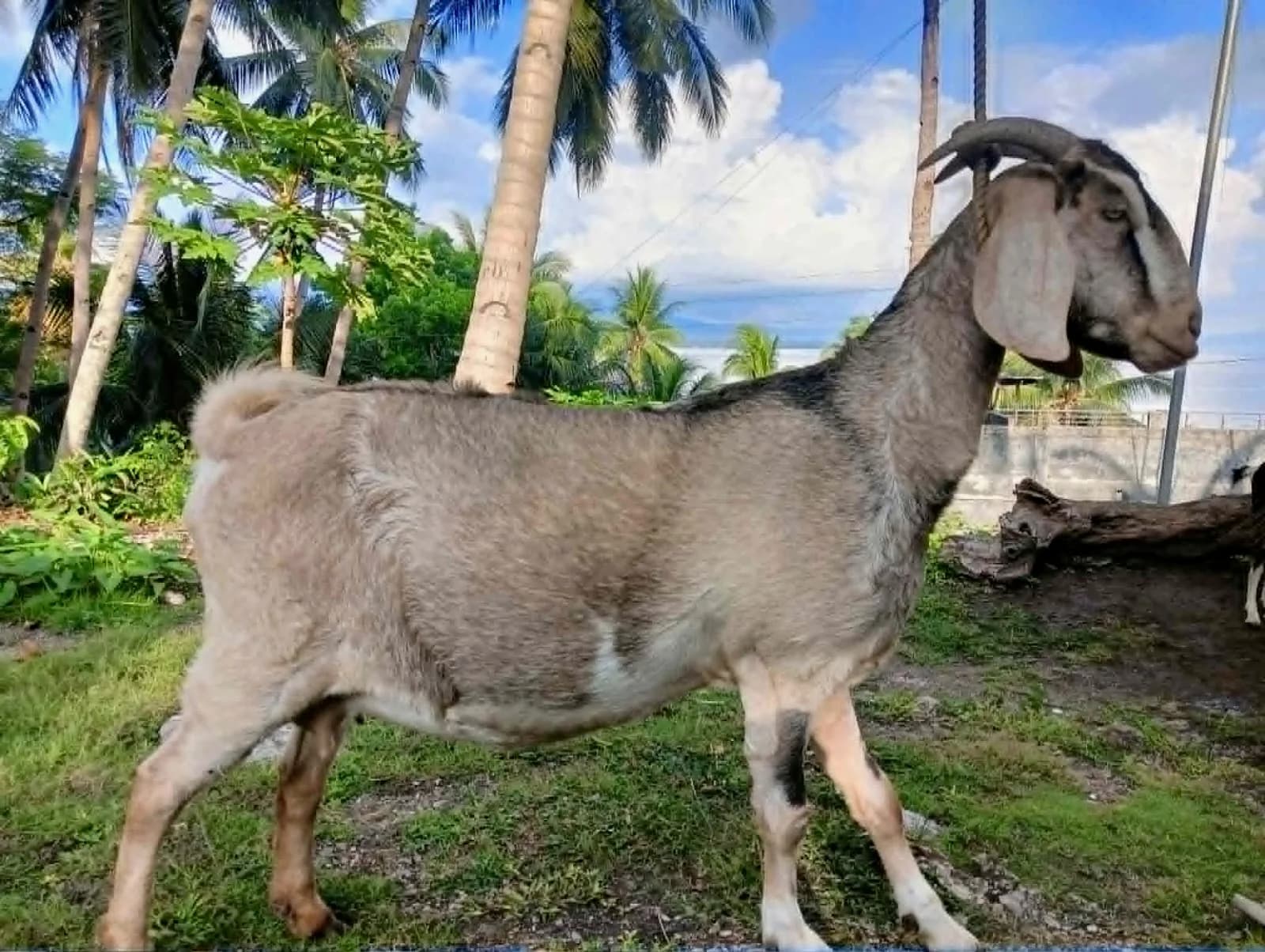
Healthy Goats Are Happy Goats
Our goats browse Napier, leaves and local fodder plants from our land. For lactating does we also add concentrates, protein, pollard and minerals so milk never comes at the cost of health.
Read the story →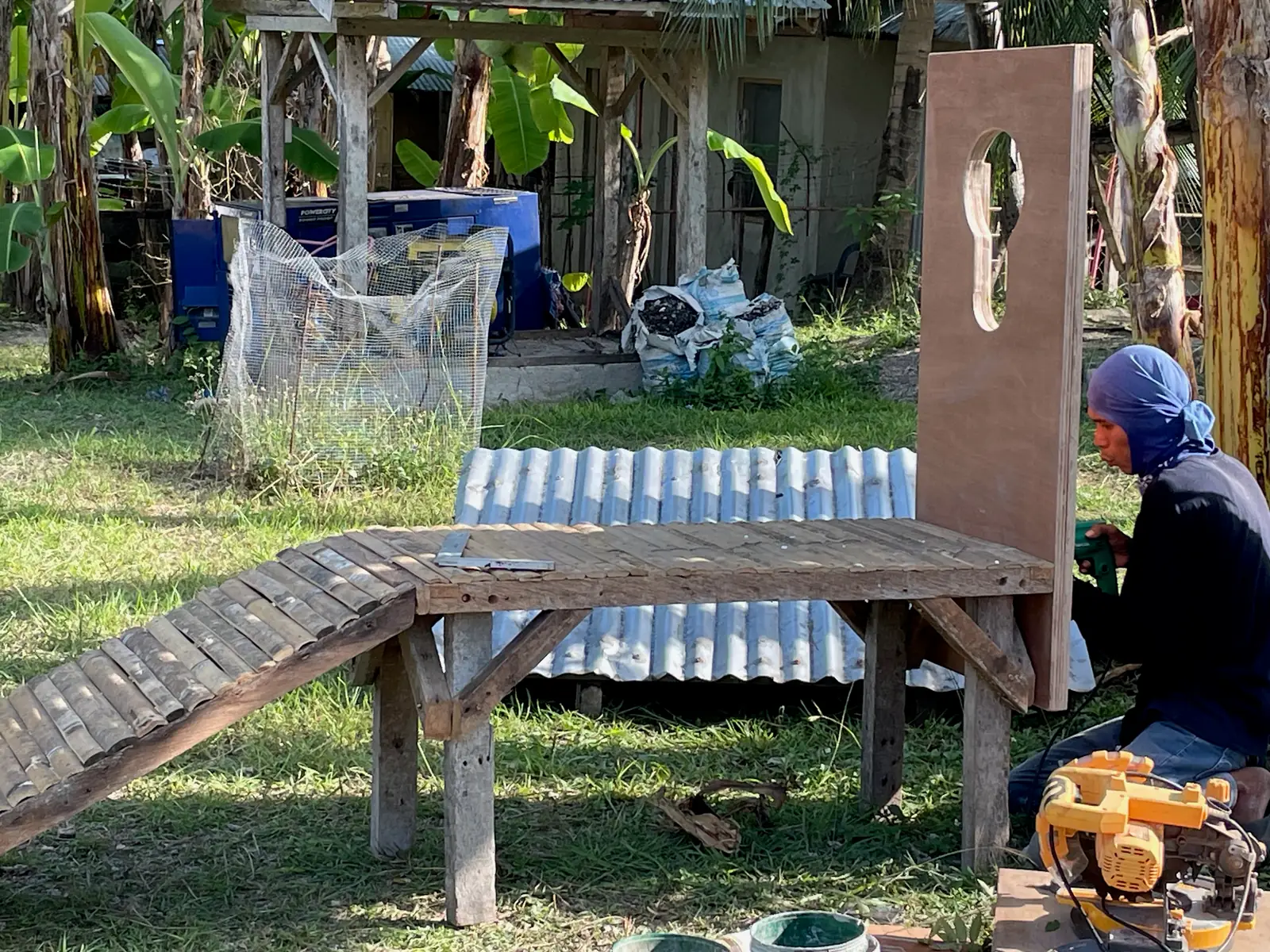
Building Our Goat Milking Stand
Milking close to the ground is hard on the back, so we built a raised goat milking stand from bamboo, reused coco lumber, and laminated marine plywood at a working height designed specifically for Jenalyn.
Read the story →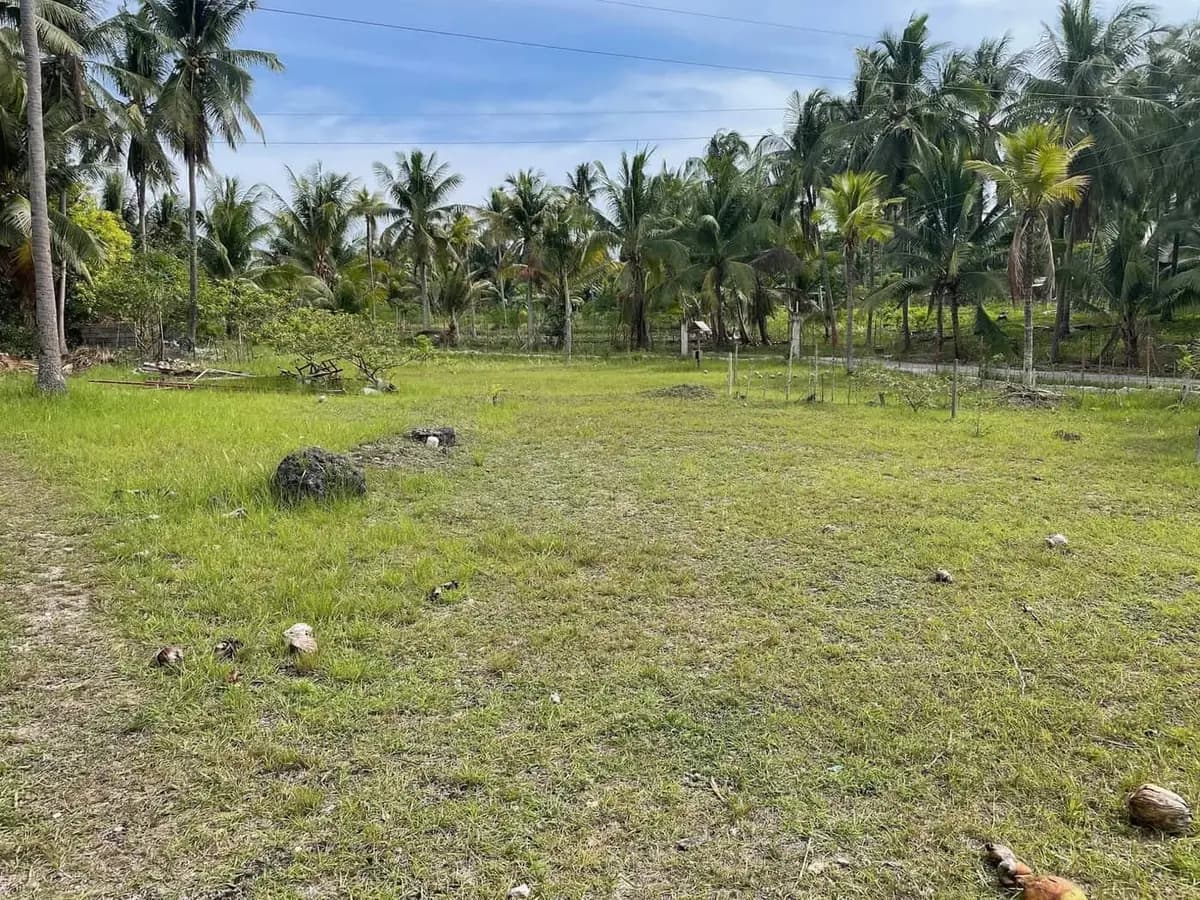
Why We Are Growing a Feeding Forest for Our Goats
We are growing a feeding forest in Santander, Cebu, to provide our goats with fresh, local and renewable fodder from our own land.
Read the story →More stories from the homestead
More honest lessons from goats, gardens, bread, and daily life on the land.