Healthy Goats Are Happy Goats
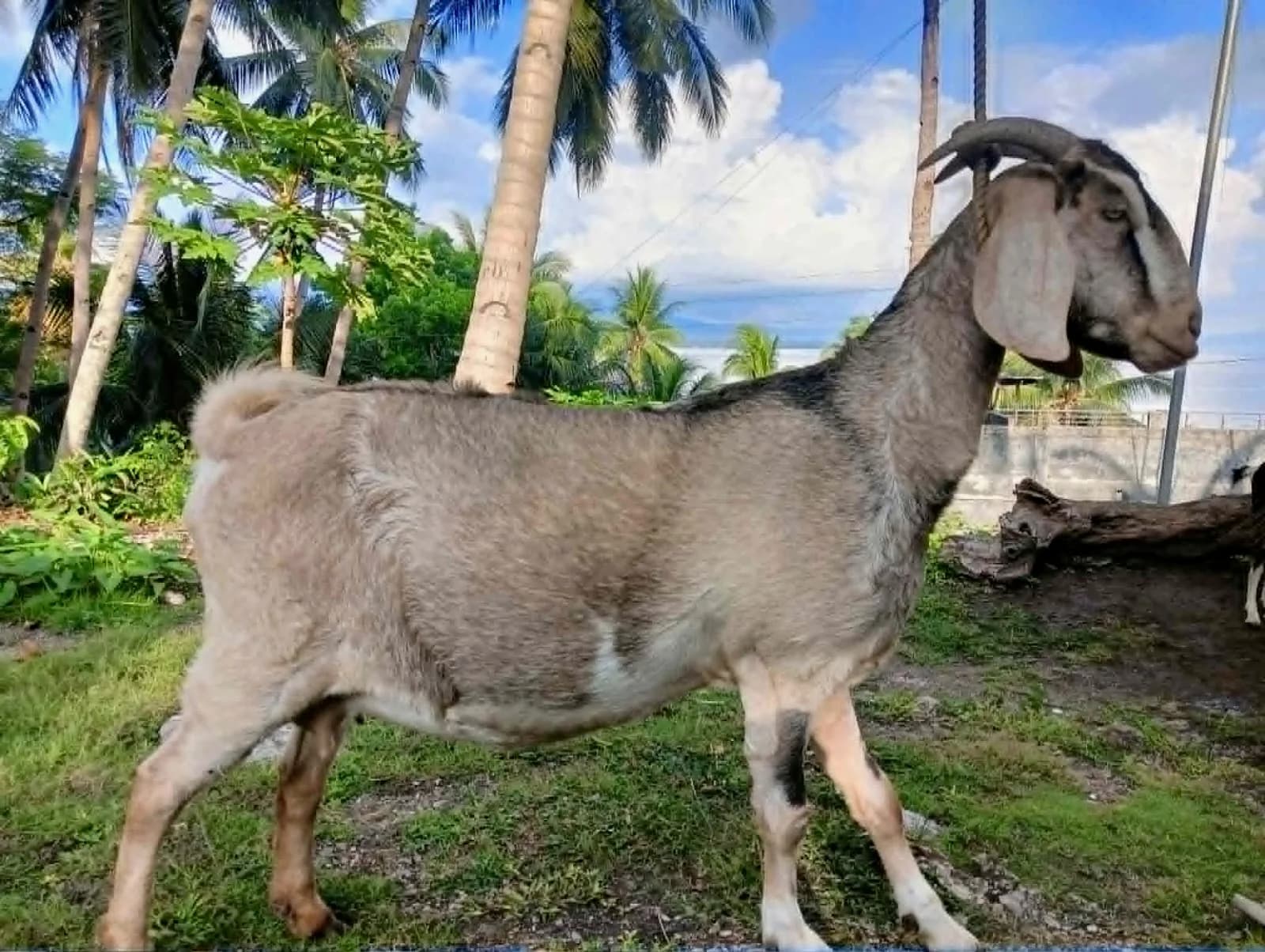
Our goats receive a wide variety of fresh forage from the land around De Klomp.
Napier grass forms an important part of that feeding system because it gives us a dependable source of roughage and long fibre. But Napier is only one part of what they eat.
We also feed moringa, banana leaves, Madre de Agua, Calliandra, Indigofera, Ipil-Ipil, kamansi leaves and other useful local fodder plants. Together, these grasses, leaves and branches provide variety and allow the goats to browse on a much broader range of plant material than Napier alone could offer.
That home-grown forage is the foundation of their diet.
But productive goats, and especially lactating does, need more than a full feeding rack. Producing milk requires additional energy, protein, vitamins and minerals. That is why we combine the forage from our land with carefully selected supplementary feeds.
A Wide Variety of Forage
Goats are natural browsers.
They do not only want to stand in front of one type of grass all day. They prefer to select leaves, young branches and different plants. That is one of the reasons we continue developing our feeding forest.
Napier gives us volume and fibre. Moringa, banana leaves, Madre de Agua, Calliandra, Indigofera, Ipil-Ipil, kamansi and other local plants give the goats variety.
Different plants contribute different things to the ration. Their value can also change depending on the age of the plant, the season, the soil and the part being eaten.
That means no single plant should be expected to provide everything a dairy goat needs.
The strength of our system comes from combining them.
Why Lactating Goats Need More
A goat that is simply maintaining her body has different requirements from a goat producing milk every day.
A lactating doe has to support her own health while also providing energy, protein, minerals and water for milk production. If her ration does not supply enough, she may begin using too much of her own body reserves.
That can show itself as loss of condition, reduced milk production or slower recovery.
We do not want milk production to come at the expense of the goat.
Our aim is not merely to produce as much milk as possible. We want our does to remain healthy, maintain a good body condition and continue producing over the long term.
That requires a ration that brings together several different components rather than relying on one feed alone.
Dairy-Goat Concentrates
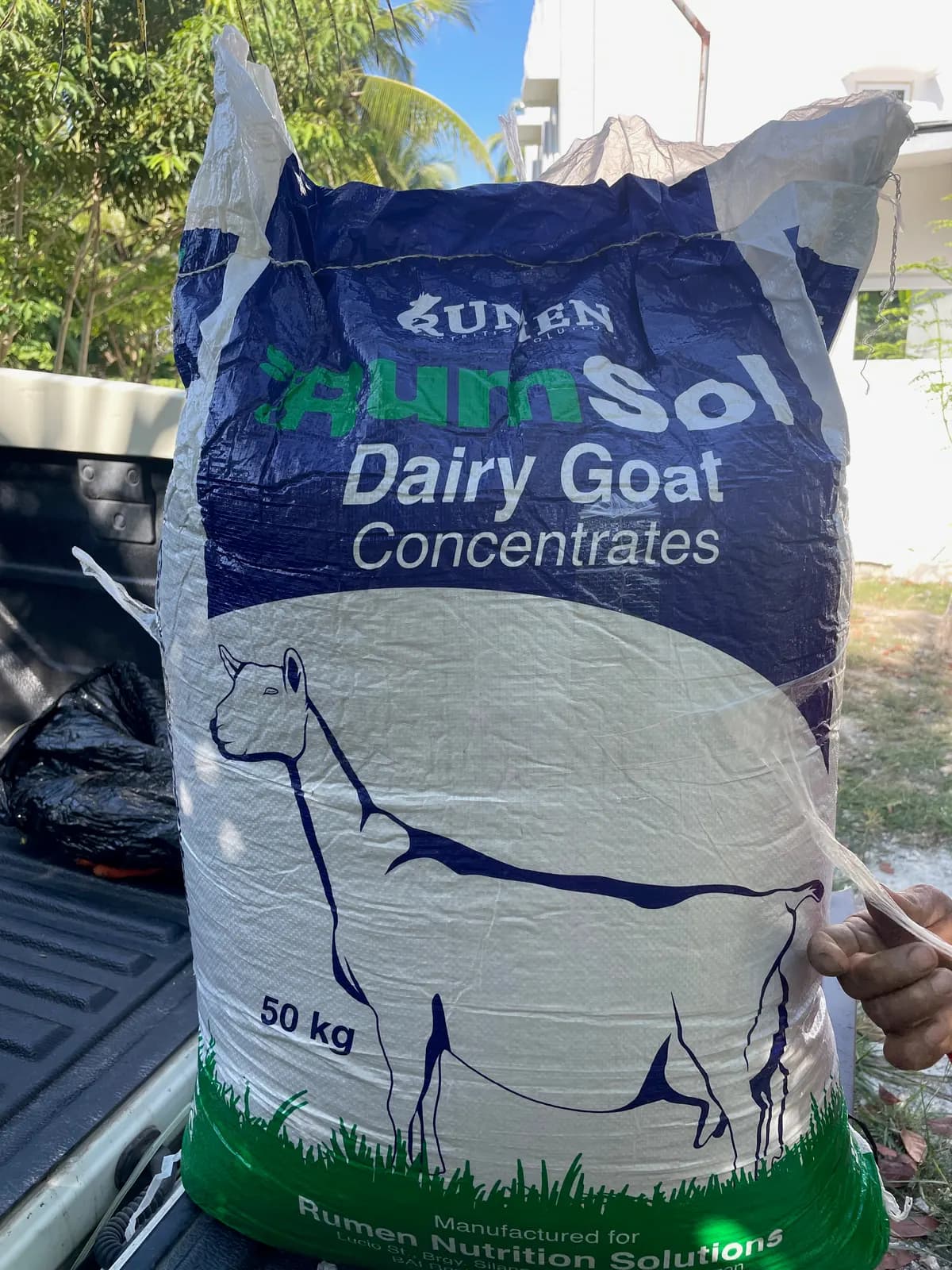
One of the supplementary feeds we use is Rumsol Dairy Goat Concentrates.
The purpose of a concentrate is to provide nutrients in a denser form than bulky green forage. This is particularly useful for lactating goats because their nutritional requirements increase, while there is still a practical limit to how much forage they can consume in a day.
We feed the concentrate alongside Napier, leaves and branches. It does not replace the forage.
The forage continues to provide the physical fibre needed for chewing and normal rumen activity. The concentrate helps increase the energy and nutrient density of the total ration.
Soybean Meal for Additional Protein
We also add soybean meal as an additional protein source.
Protein is needed for growth, tissue repair and milk production. Napier is valuable as roughage, but it is not intended to carry the entire protein requirement of a productive dairy goat by itself.
The leaves and fodder plants add further variety, but during lactation we still want to make sure the ration contains enough usable protein.
Soybean meal helps us strengthen that part of the feeding programme.
It is not fed as a complete diet. It is one ingredient within the wider combination of forage, concentrate, minerals and other supplementary feed.
The Role of Pollard
Pollard is another ingredient we use in the ration.
It contributes energy, some protein and additional fibre. Because it is less bulky than long grass and branches, it can help increase the nutrient density of the feed offered to productive animals.
At the same time, pollard is not a substitute for long-stemmed forage.
Napier and browse remain important because their physical structure encourages chewing and saliva production and helps keep the rumen functioning normally.
We therefore use pollard as a complement to the forage rather than turning the ration into a wet mash or concentrate-only feed.
Why We Add CeciCal
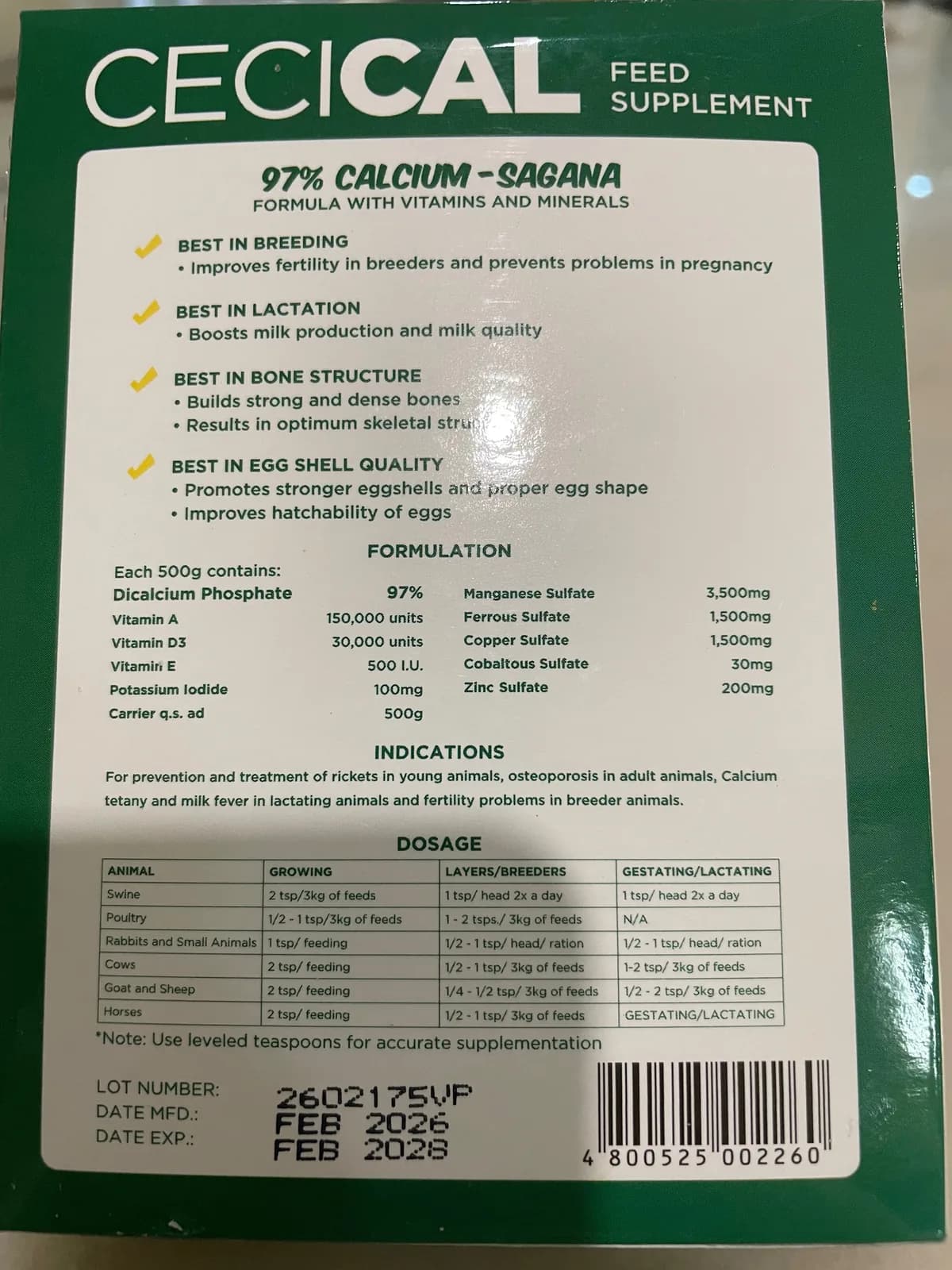
We also add CeciCal as a source of calcium, vitamins and minerals.
The product label lists dicalcium phosphate, vitamins A, D3 and E, and several trace minerals, including manganese, iron, copper, cobalt, zinc and iodine.
These nutrients support several important functions in the body.
Calcium is important for bones, muscle function and milk production. Vitamins and trace minerals contribute to growth, fertility, immune function and general health.
This becomes especially important during pregnancy and lactation, when the demands on the doe increase.
We do not look at CeciCal as a solution by itself. It is one part of a wider feeding system that includes forage, concentrates, protein and energy sources.
Building a More Complete Feeding Programme
The real value does not come from any one ingredient.
Napier provides dependable roughage and long fibre.
Moringa, banana leaves, Madre de Agua, Calliandra, Indigofera, Ipil-Ipil, kamansi and other local fodder plants give the goats variety and allow us to make better use of what grows here.
Rumsol concentrate helps increase the nutrient density of the ration.
Soybean meal adds extra protein.
Pollard contributes energy, fibre and some protein.
CeciCal adds calcium, vitamins and trace minerals.
Together, these ingredients create a much more complete feeding programme than any of them could provide alone.
This is particularly valuable for lactating goats. Milk production increases the demand for energy and nutrients, so the feeding programme has to support both the milk and the animal producing it.
Not Every Goat Needs the Same Amount
A growing kid, a dry adult goat, a pregnant doe and a lactating doe do not all need exactly the same ration.
We pay attention to the animal rather than blindly feeding every goat the same quantity.
We look at:
body condition
appetite
manure consistency
activity and behaviour
stage of pregnancy
stage of lactation
milk production
The amount and type of supplementary feed can then be adjusted according to the animal’s needs.
This is also why we do not present our feeding programme as a universal formula.
Supplements Do Not Replace the Land
Buying supplementary feed does not mean that our feeding forest or home-grown forage has failed.
The two systems work together.
The land provides a large part of the goats’ daily feed. It gives us Napier, leaves, branches and a growing variety of useful plants. The supplements allow us to strengthen the ration where home-grown forage alone may not consistently provide enough energy, protein, vitamins or minerals.
That fits the way we work at De Klomp:
Producing what we can. Buying what we must.
Healthy Goats Are Happy Goats
Our goats cannot calculate the protein, energy or mineral content of their ration.
But they do show us whether the total system is working.
A healthy goat is alert, curious, active and eager to eat. A lactating doe should be able to produce milk without steadily losing too much body condition.
That is why we combine home-grown forage with concentrates, soybean meal, pollard and mineral supplementation.
Not because Napier has no value.
Not because leaves and branches are inadequate.
And not because a bag of concentrate can replace proper forage.
We do it because good feeding is about balance.
Healthy goats are happy goats.
Enjoyed this story?
If you know someone who enjoys homesteading, goats, traditional food, or self-sufficiency, feel free to share it.
Related stories from De Klomp
More from the homestead about food, goats, growing, and building a resilient life.
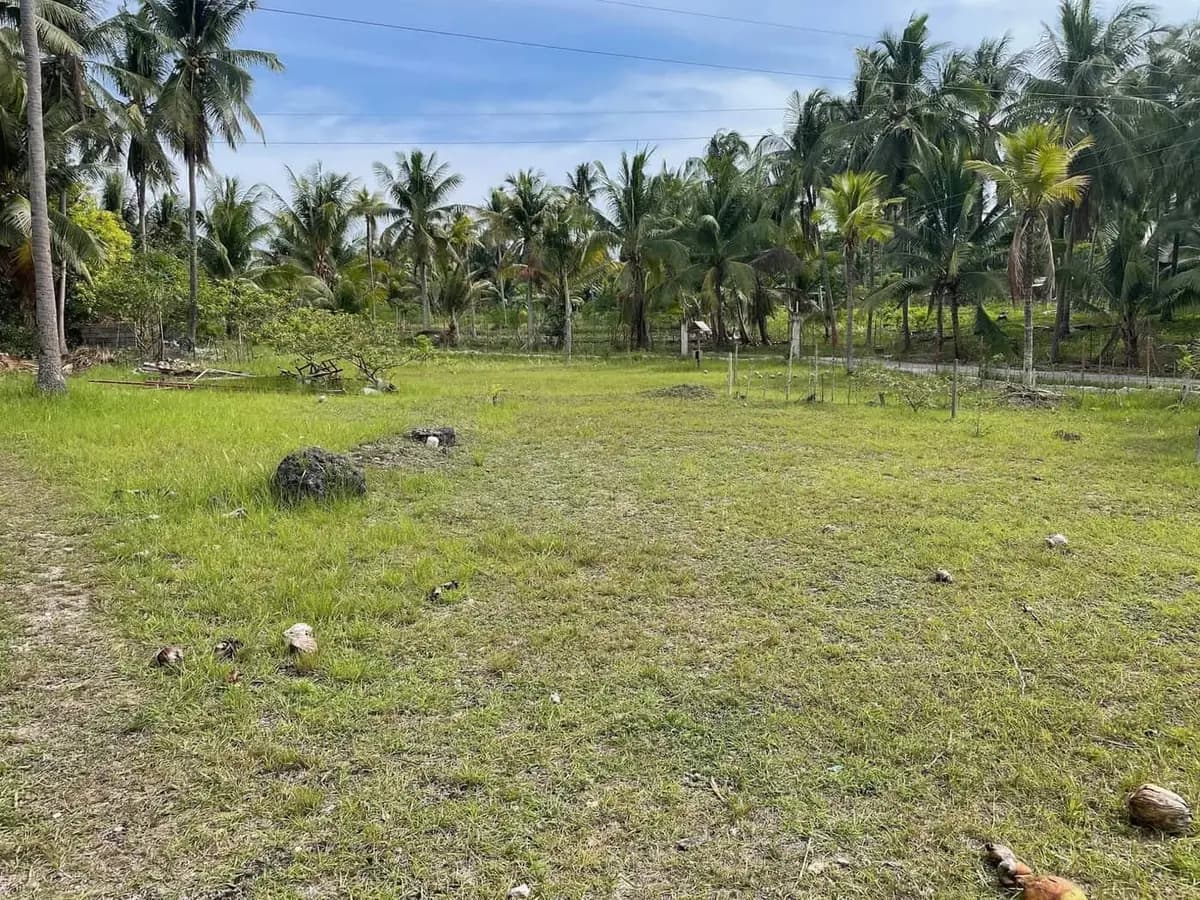
Why We Are Growing a Feeding Forest for Our Goats
We are growing a feeding forest in Santander, Cebu, to provide our goats with fresh, local and renewable fodder from our own land.
Read the story →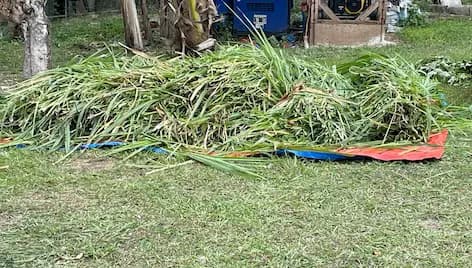
How We Made Napier Grass Silage in a 47-Liter Drum
At De Klomp Homestead we turned fresh Napier grass into goat silage in a 47-liter drum, packing it layer by layer and compacting each layer by foot.
Read the story →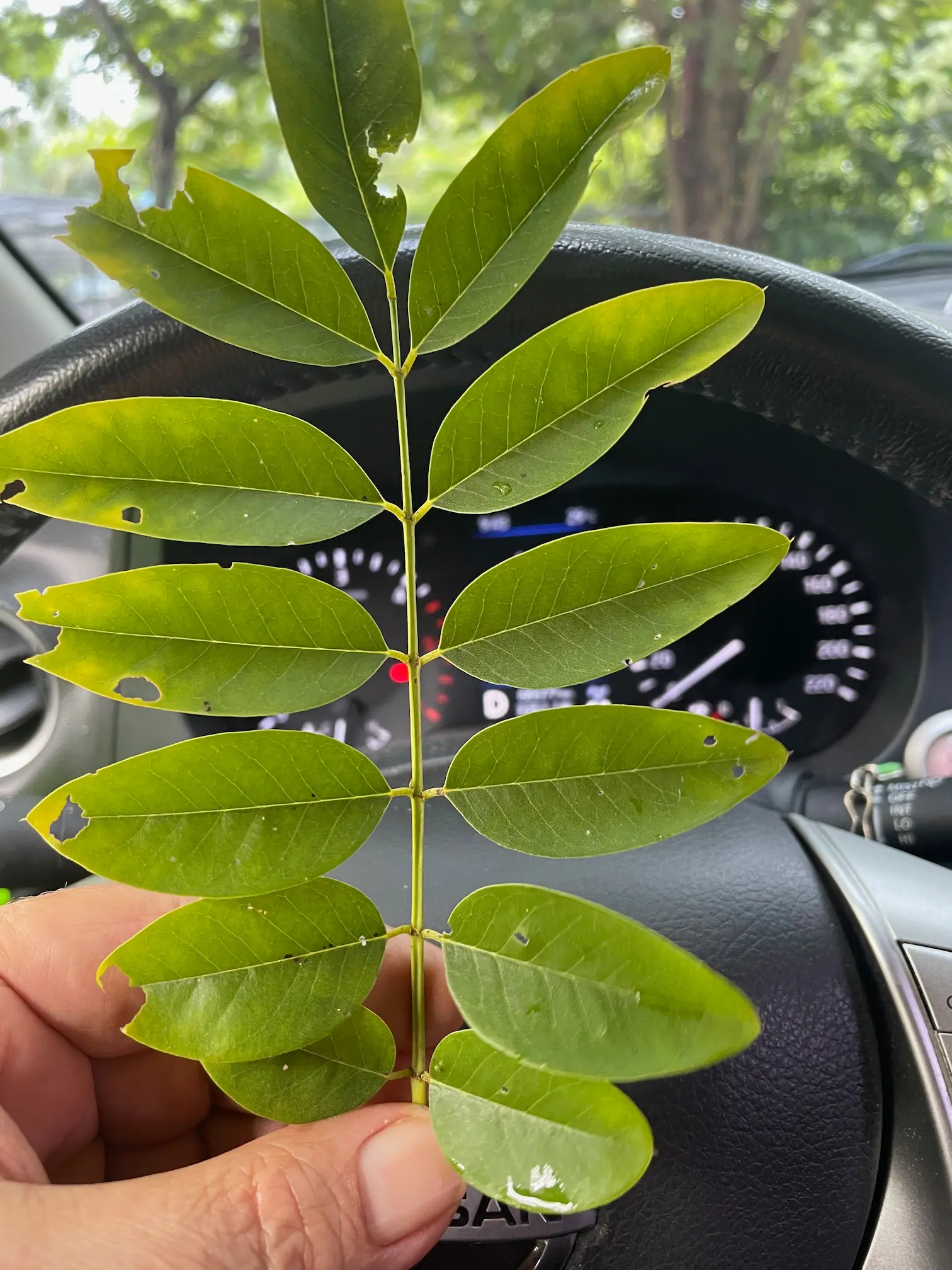
Indigofera Found: One More Piece of the Feeding Forest
We found Indigofera growing at De Klomp and began exploring how this high-protein tropical forage could support our goats and feeding forest.
Read the story →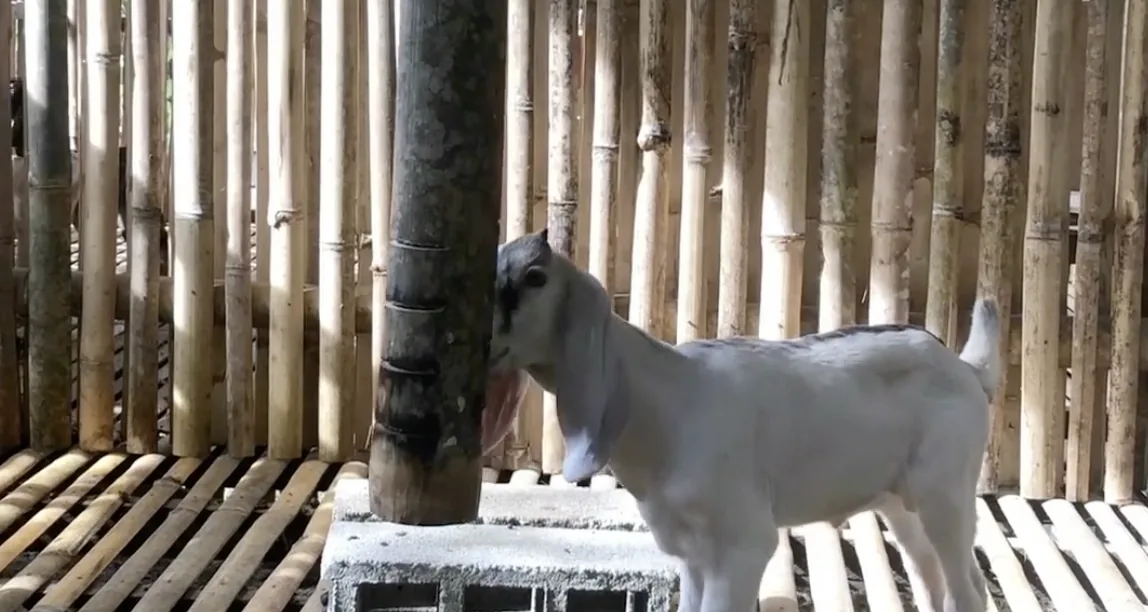
A Bamboo Salt Lick Holder for Our Goats
We made a simple salt lick holder from bamboo, using its natural node as the base and a stainless-steel chain for strength and durability.
Read the story →More stories from the homestead
More honest lessons from goats, gardens, bread, and daily life on the land.