
Why We Pick Mangoes Green in the Philippines
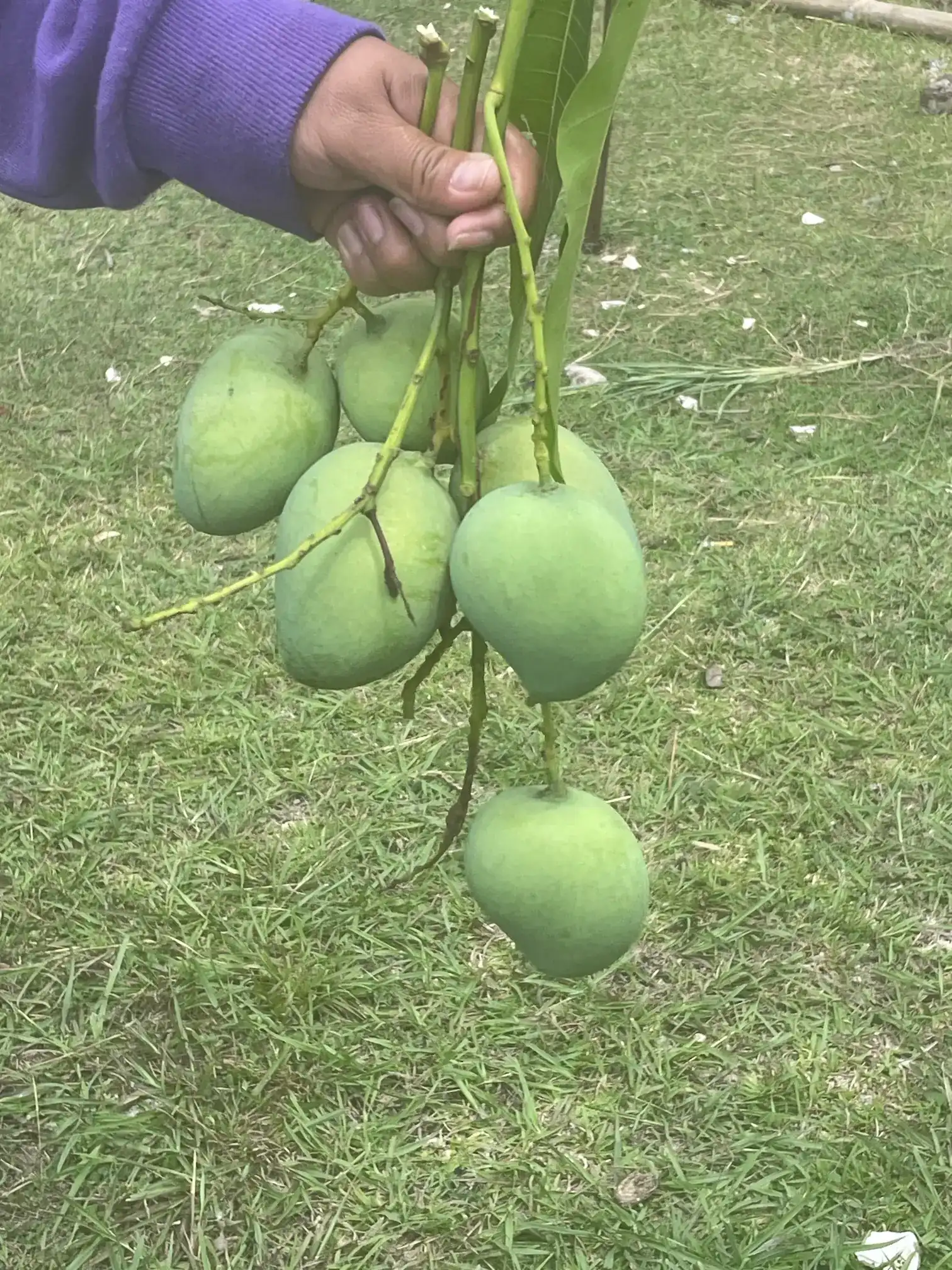
The mangoes in the photograph are green, firm, and sour.
To someone used to buying mangoes in Europe or the United States, they may look unfinished. Most mangoes sold there are expected to be ripe before they are eaten. They are soft, fragrant, juicy, and very sweet. A green mango might be left on the counter for several days in the hope that it changes colour and softens.
Here in the Philippines, that is only one way to eat a mango.
Green mangoes are intentionally harvested and eaten while the flesh is still firm and crisp. Their sharp sourness is exactly what people want. They can be eaten simply with salt, but they are also combined with vinegar, fresh chili, or bagoong to create something salty, sour, spicy, and intensely savoury.
For us at De Klomp, harvesting green mangoes is therefore not a matter of picking the fruit too early. It is a different kind of harvest for a different kind of food.
A green mango is not just an unripe sweet mango
A ripe mango and a green mango offer two completely different eating experiences.
A ripe mango is soft and sweet. The flesh is juicy, aromatic, and often eaten as a dessert fruit. It can be used in shakes, cakes, ice cream, fruit salads, sauces, or simply eaten directly from the skin.
A green mango is much firmer. Depending on the variety and its stage of maturity, the flesh can be pale, crunchy, sharply sour, and sometimes slightly bitter near the skin or seed.
That sourness is not a defect. It is the main attraction.
The crisp texture and acidity allow green mango to work with ingredients that would overpower a ripe mango. Salt brings out the fruit’s flavour. Vinegar adds another layer of acidity. Fresh chili gives it heat. Bagoong adds saltiness and a deep fermented savoury flavour.
The result is not really a dessert. It is closer to a snack, side dish, street food, or something served alongside a meal.
Why this can be surprising to Europeans
When people in Europe or the United States hear the word mango, they usually imagine a soft orange fruit with sweet juice running down their hands.
That expectation is shaped by the kinds of mangoes that survive export and by the way mangoes are marketed in supermarkets. Fruit is normally sold with the promise that it will ripen into sweetness.
The Philippine relationship with mangoes is broader.
A mango does not have to reach full ripeness before it becomes useful. Different stages of the fruit offer different flavours and different possibilities. A mature green mango can be harvested for its crunch and acidity, while other fruit can remain on the tree and ripen for sweet eating.
That makes the harvest more flexible. It also means that the same tree can produce ingredients for savoury snacks as well as sweet fruit.
The simplest way: green mango with salt
The easiest way to eat a green mango is also one of the best.
Peel the mango, cut the flesh into slices, and serve it with a small dish of salt. The slices can be dipped lightly into the salt before each bite.
The salt does not remove the sourness. Instead, it changes how the sour flavour is experienced. It reduces some of the harshness and makes the natural mango flavour more noticeable.
This is a good way to understand the fruit on its own. There is no sauce hiding its texture, no sugar turning it into dessert, and no strong fermented flavour competing with it.
It is simply crisp mango, sour juice, and salt.
Adding vinegar and fresh chili
Green mango also works very well with vinegar and fresh chili.
The mango already has plenty of acidity, but vinegar gives the mixture a cleaner, sharper edge. Fresh chili adds heat without changing the crisp texture of the fruit.
We prefer fresh chili here rather than dried chili flakes. Fresh chili belongs naturally with the fresh fruit and vinegar, and it gives both flavour and heat.
Simple green mango with vinegar and fresh chili
Peel a firm green mango and cut it into thin slices or narrow strips.
Place the mango in a bowl and add:
- a small splash of vinegar;
- a pinch of salt;
- finely sliced fresh chili to taste.
Mix everything together and leave it briefly so the salt and vinegar coat the mango.
Taste it before adding more seasoning. Green mangoes differ in sourness, and fresh chilies differ enormously in heat. It is better to adjust the mixture gradually than to hide the flavour of the fruit.
This can be eaten immediately as a sharp, refreshing snack or served as a small side dish with a meal.
What is bagoong?
Bagoong is a Filipino fermented condiment. It is commonly made from shrimp or fish mixed with salt and allowed to ferment.
There are different types of bagoong, and they do not all taste the same. Some are made from small shrimp, while others are made from fish. The texture, colour, salt level, fermentation, and preparation can vary between regions, producers, and households.
The kind often served with green mango is usually strongly salty and savoury, with the deep flavour that comes from fermentation. Some preparations may also include sugar, garlic, onion, chili, or other seasonings.
For someone who did not grow up eating fermented seafood condiments, bagoong can be a powerful first experience. Its smell and taste are much stronger than the mild sauces normally served with fruit in Europe.
But that strength is exactly why it works with green mango.
The mango is crisp, fresh, and sharply sour. The bagoong is salty, concentrated, fermented, and savoury. Each one balances the other.
Green mango with bagoong
Preparing green mango with bagoong does not require a complicated recipe.
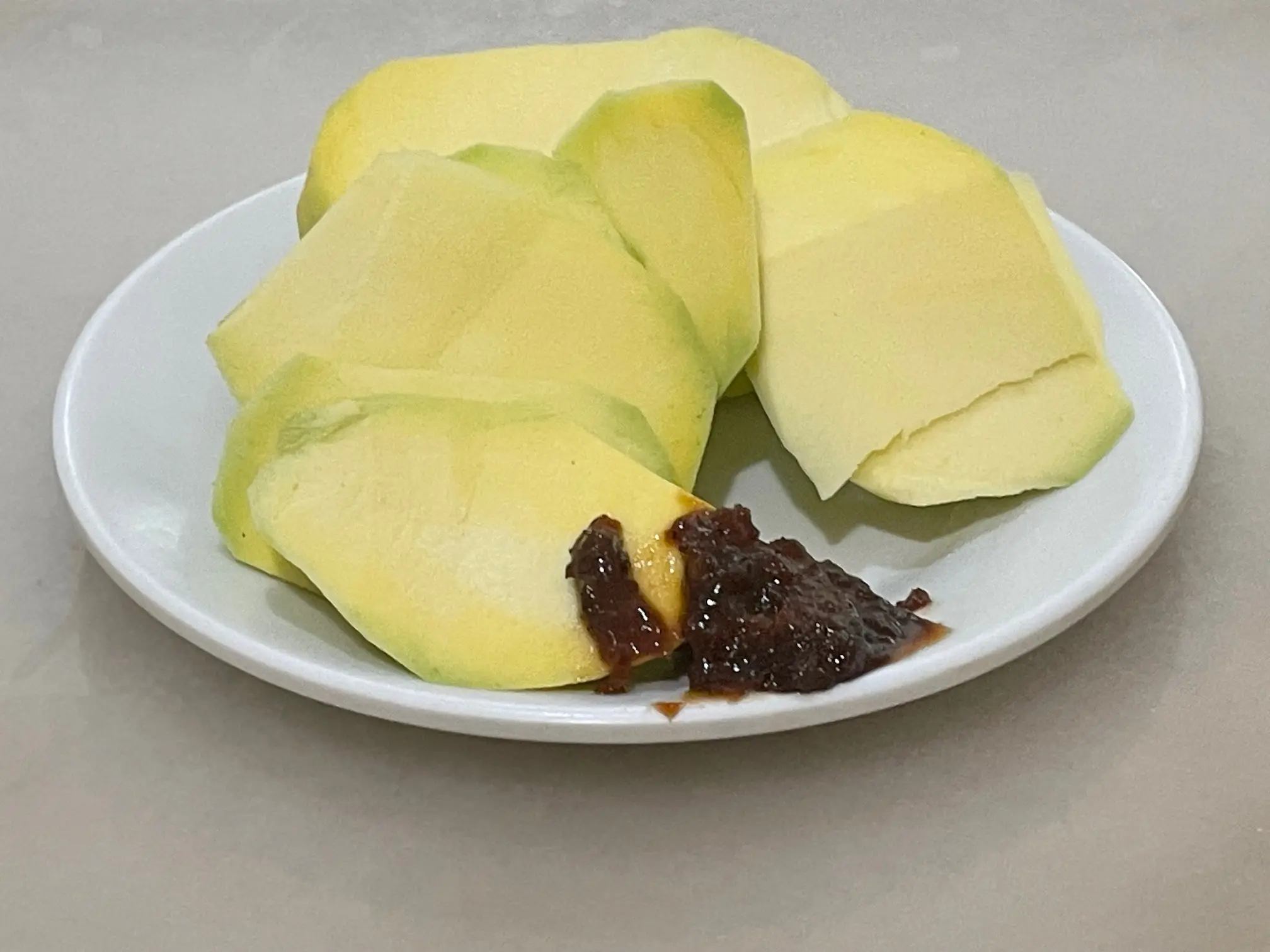
The mango is peeled and sliced, and the bagoong is served in a small dish for dipping. Only a little is needed because bagoong can be intensely salty.
A slice of mango gives the crunch and acidity. The bagoong adds savoury depth. Fresh chili can also be added when more heat is wanted.
The exact balance is personal. Some people use only a light coating of bagoong. Others prefer enough to make the fermented flavour the dominant part of the bite.
For a newcomer, it makes sense to begin with a small amount and increase it gradually.
One fruit, several different harvests
Growing food changes the way we look at ripeness.
In a supermarket, fruit is often presented as if it has one correct moment: the moment when it is ready to be eaten in the most familiar way.
On a homestead, the useful period can be much wider.
Young leaves may be edible before a plant produces fruit. Green fruit may be used differently from ripe fruit. Overripe fruit may still be useful for cooking, fermenting, feeding animals, saving seed, or returning nutrients to the soil.
Mangoes fit into that pattern perfectly.
A green mango is useful because it is green. A ripe mango is useful because it is ripe. Neither one has to replace the other.
That is one of the advantages of growing food close to the kitchen. We are not limited to the stage of ripeness that supermarkets consider easiest to transport and sell.
We can harvest according to the dish we want to make.
Mango trees in a tropical food forest
Mango trees are more than fruit producers.
In a tropical growing system, a mature tree also creates shade, catches sunlight high in the canopy, drops organic material, and becomes part of the structure of the land.
That does not mean every mango tree automatically belongs everywhere. A large tree needs space. Its shade affects the plants growing below it, and fallen fruit needs to be managed. Like every tree in a food forest, it should have a purpose and a suitable position.
But where mangoes fit, they can provide food in more than one form.
The fruit can be harvested green for sour snacks and savoury dishes. Other mangoes can be allowed to mature and ripen. Surplus fruit can potentially be preserved or processed rather than wasted.
This is the kind of diversity we want from our goats and feeding forest: not merely a collection of plants, but a system in which every layer has a purpose.
The value of learning local ways to eat what grows here
Living in the Philippines means learning that familiar crops may be used in unfamiliar ways.
It is easy for someone from Europe to look at a green mango and think only about the sweet fruit it might become later. But doing that ignores the food culture that already exists around it.
The local way is not a compromise made because the mango is not ripe yet. The green mango is deliberately chosen for its own qualities.
It is crisp.
It is sour.
It stands up to salt, vinegar, fresh chili, and fermented seafood.
It offers a flavour that a fully ripe mango cannot provide.
For us, that is part of learning how to grow and eat food in a tropical climate. We do not need to force every harvest into the expectations we brought from somewhere else. We can learn what the crop already means here and then decide how it fits into our own kitchen.
It is part of the wider process of learning old-school food skills while adapting them to the ingredients and climate around us.
From the tree to the table
These mangoes were not picked because we were impatient.
They were picked because green mangoes are meant to be eaten green.
Some may be served simply with salt. Others may be mixed with vinegar and fresh chili. And for the full Filipino experience, there is always the combination of crisp sour mango and salty bagoong.
A photograph of a few green mangoes may look like a small harvest update.
But behind it is a much larger story about climate, food culture, ripeness, flavour, and the difference between buying fruit from a supermarket and harvesting it from the land where it grows.
At De Klomp, that is exactly the kind of story our food forest continues to teach us.
You can find more practical stories from the land in the De Klomp Homestead Journal.
Enjoyed this story?
If you know someone who enjoys homesteading, goats, traditional food, or self-sufficiency, feel free to share it.
Related stories from De Klomp
More from the homestead about food, goats, growing, and building a resilient life.
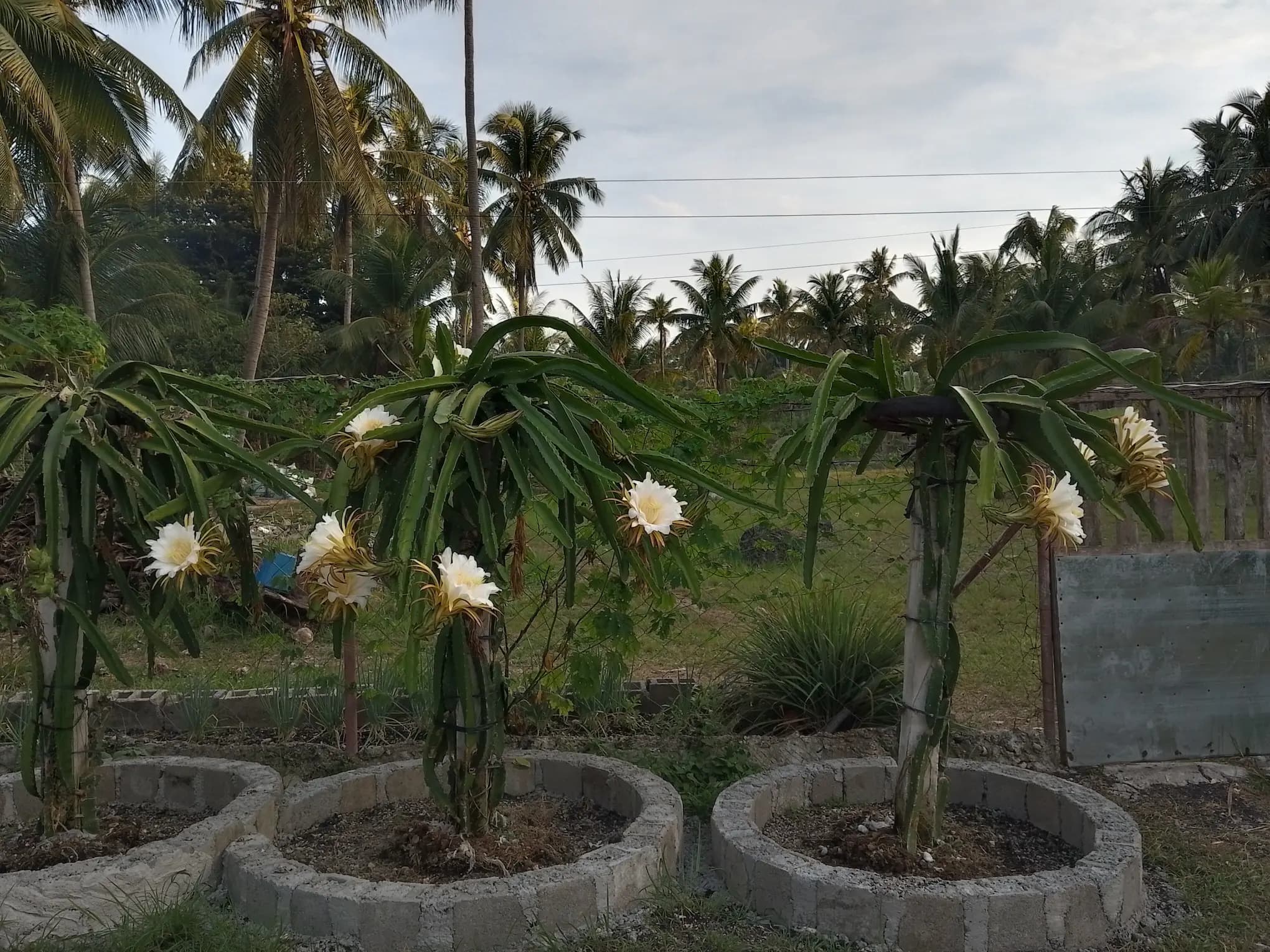
Our First Dragon Fruit Harvest at De Klomp Santander
We harvested the first dragon fruit grown on our land at De Klomp Santander. A small but meaningful milestone in building our productive Cebu homestead.
Read the story →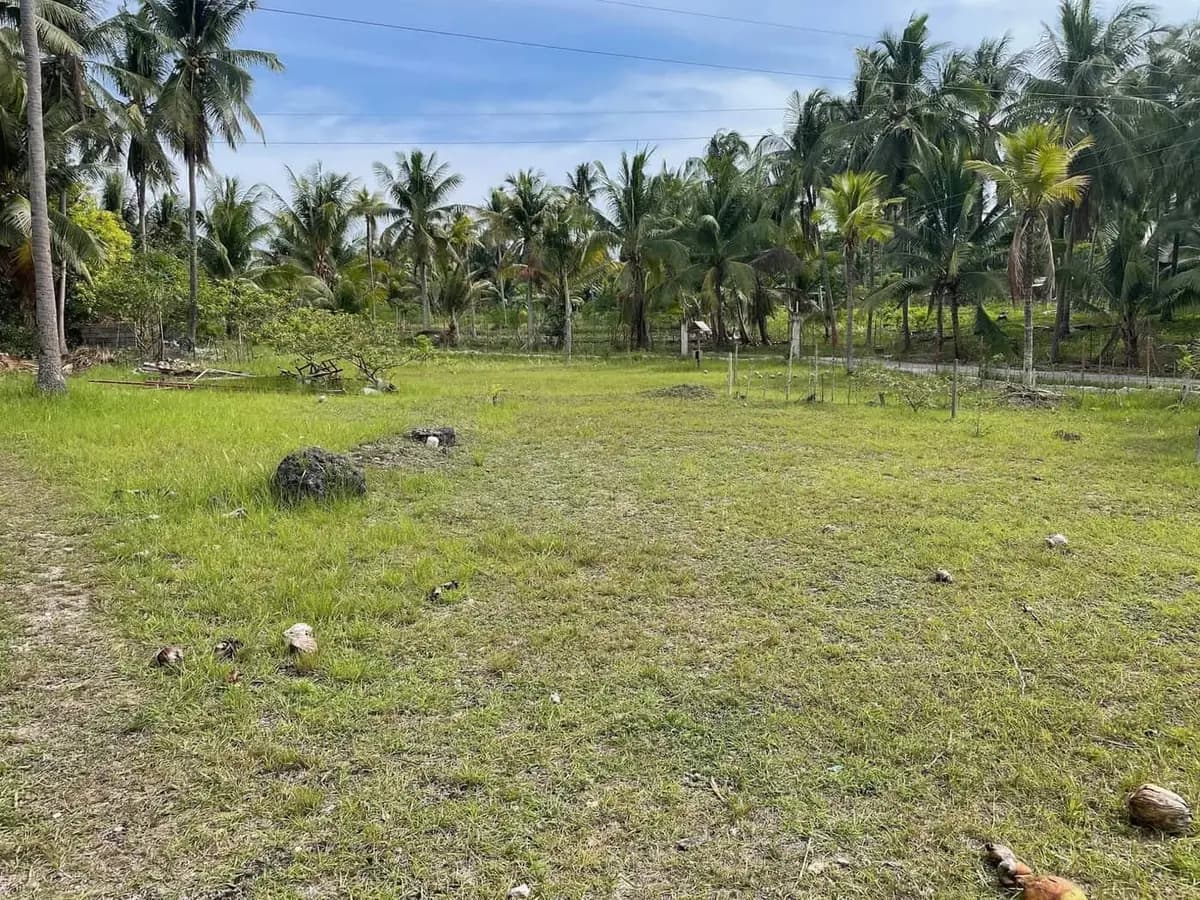
Why We Are Growing a Feeding Forest for Our Goats
We are growing a feeding forest in Santander, Cebu, to provide our goats with fresh, local and renewable fodder from our own land.
Read the story →
Indigofera Found: One More Piece of the Feeding Forest
We found Indigofera growing at De Klomp and began exploring how this high-protein tropical forage could support our goats and feeding forest.
Read the story →
Bread That Goes Stale in Two Days, and Why That's Good
Our homemade bread goes stale after two days because it is baked for flavor and nourishment, not engineered for an unnaturally long shelf life.
Read the story →More stories from the homestead
More honest lessons from goats, gardens, bread, and daily life on the land.