
What We Make With Our Smoked Bacon Trimmings
Whenever we make and smoke our own bacon at De Klomp, we are left with trimmings. They are perfectly good pieces of bacon, but they are often too small or irregular to become neat slices.
Some of those pieces disappear into other meals. They are useful in soups, sauces, vegetables and plenty of other dishes. But a batch of bacon can leave us with more trimmings than we need immediately.
That is when we make bacon jam.
Making Use of What Is Already There
Bacon jam is not something we make because we need another product on a shelf. We make it because the bacon has already been cured, smoked and trimmed, and there is no reason to waste the pieces that remain.
This is how we prefer to work at De Klomp. One process often creates the starting point for something else. The neat pieces become sliced bacon, some of the trimmings go into ordinary meals, and the remainder can become a completely different food.
The result is rich, sweet, salty and smoky. It also tastes far more deliberate than the words “leftover trimmings” might suggest.
Bacon, Onions and Time
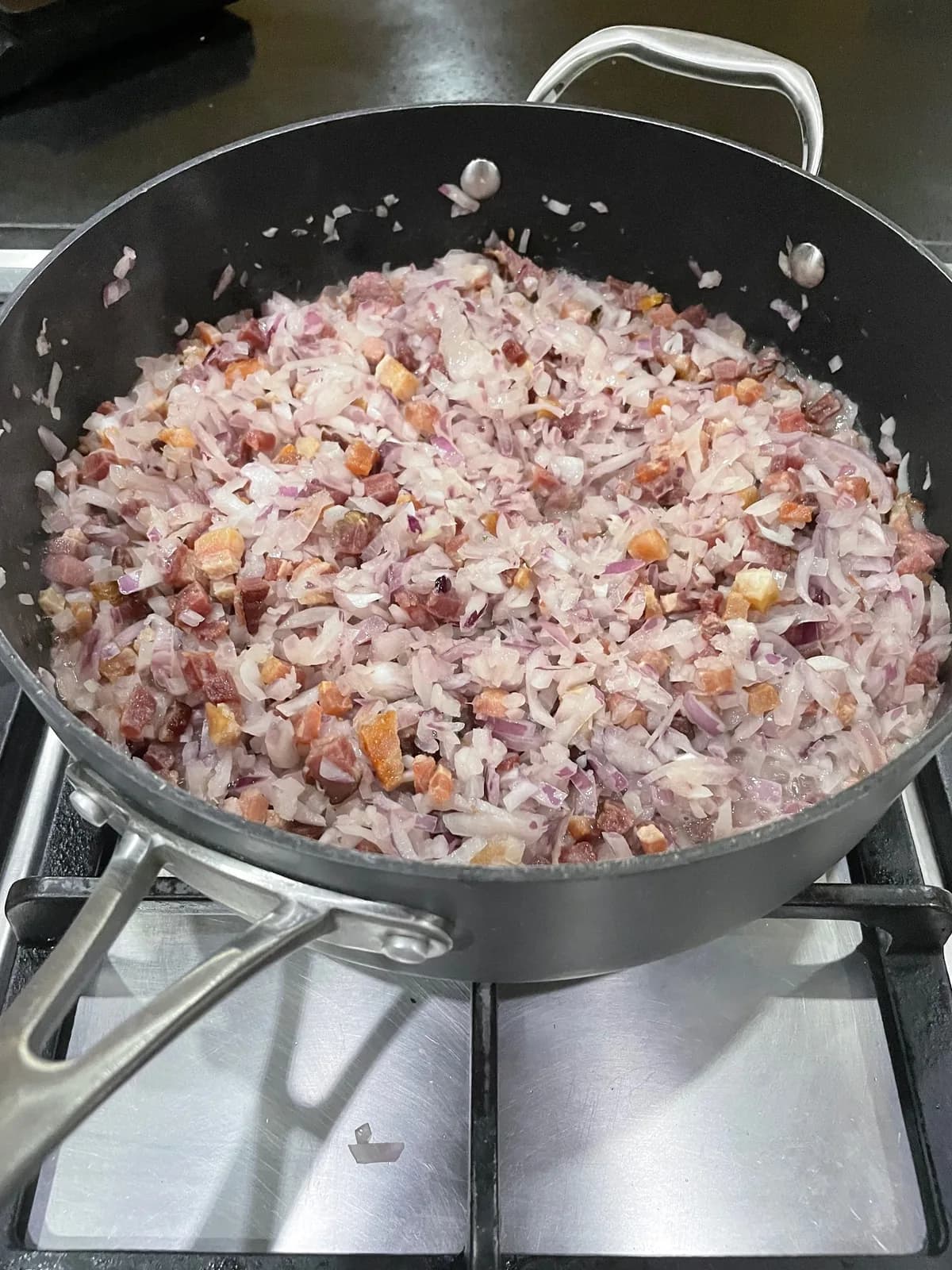
We begin by cutting the smoked bacon trimmings into small pieces and cooking them in a large pan. Once the bacon has started to render and brown, we add a generous amount of chopped onion.
At first, the pan looks almost overwhelmed by onions. That changes as they soften, release their moisture and slowly cook down around the bacon.
This is not a dish that needs to be rushed. The texture develops gradually as the bacon cooks, the onions soften and the liquid reduces.
A Splash of Jack Daniel’s
Before adding the sugar, we deglaze the pan with Jack Daniel’s.
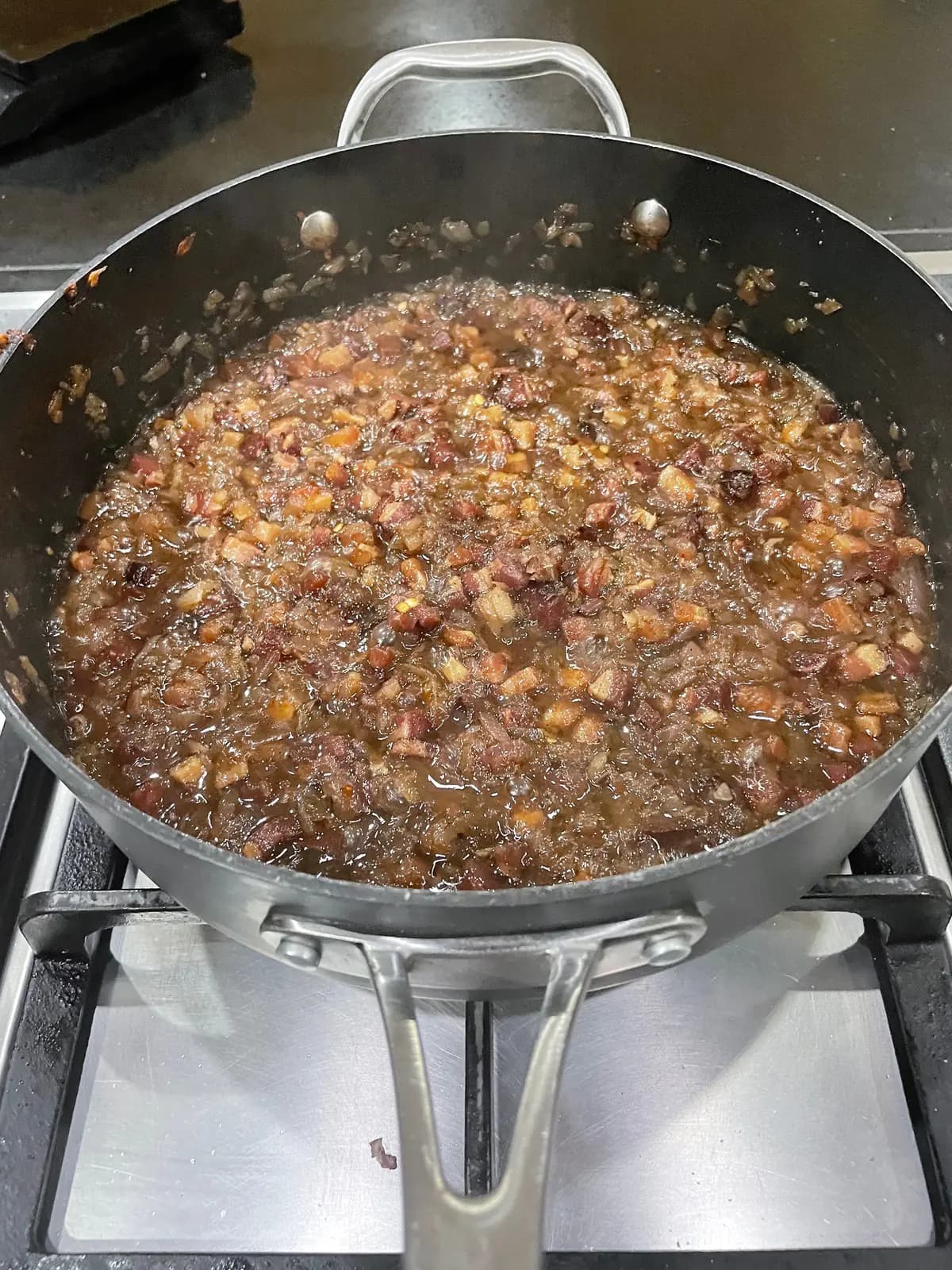
The whiskey lifts the cooked flavours from the bottom of the pan and becomes part of the mixture as it reduces. We are not trying to make the bacon jam taste like a glass of whiskey. It simply adds another layer behind the smoke, salt, sweetness and onions.
After deglazing, we add brown sugar. We specifically prefer brown sugar because we like the way it caramelises and the deeper flavour it brings to the finished jam.
From there, the mixture continues cooking until the onions, bacon, sugar and reduced liquid come together and reach the thick consistency we are looking for.
Knowing When It Is Ready
There is a clear difference between a pan full of bacon and onions and a finished bacon jam.
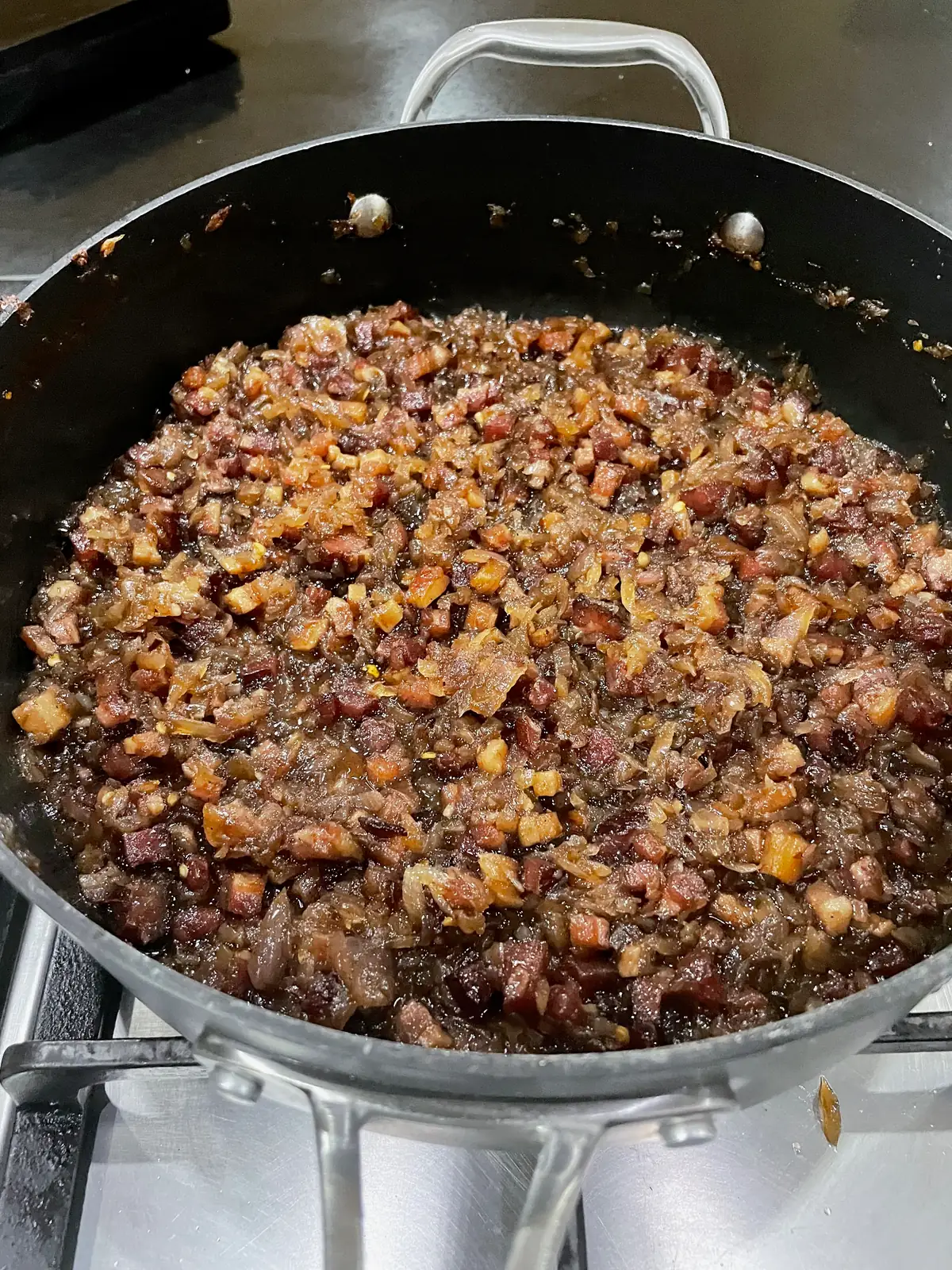
As it cooks, the mixture becomes darker, glossier and thicker. The liquid reduces, the onions almost disappear into the mixture, and everything begins to hold together.
We stop when it has the consistency of a proper savoury jam. It should still be spoonable, but it should no longer look like bacon and onions floating in liquid.
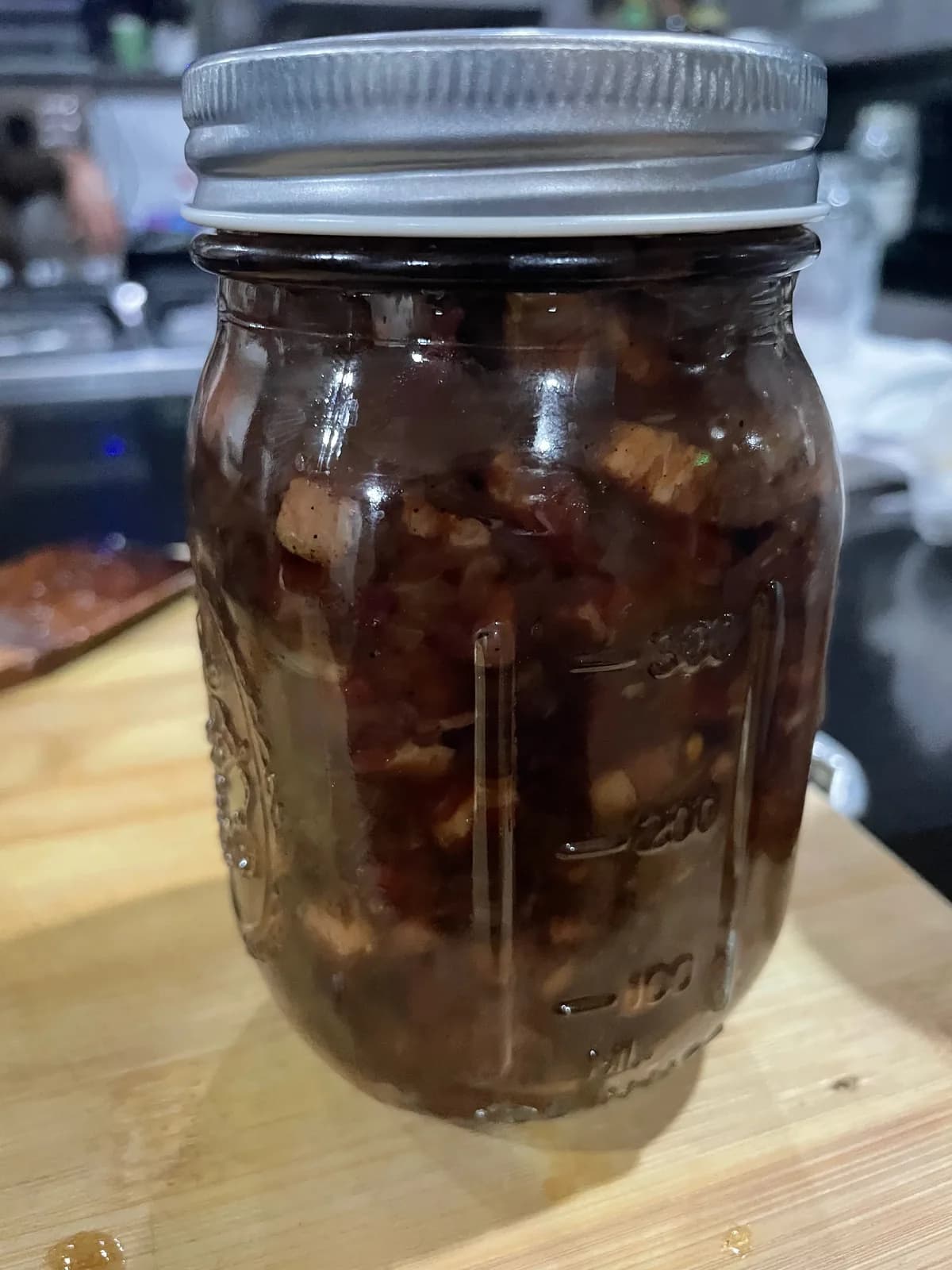
The finished jam is then transferred into clean, sterilised preserving jars or mason jars and sealed carefully.
How We Store It
Because bacon jam contains meat, careful handling matters.
We work cleanly, use sterilised jars and keep the finished bacon jam refrigerated at around 4°C. Although the bacon was already cured and smoked and the mixture is cooked for a long time, we do not treat it as a shelf-stable product.
We also do not give it a guaranteed number of days or weeks. Homemade products can differ depending on ingredients, preparation, cleanliness and storage. We simply describe how we handle it at De Klomp: clean jars, careful filling, a proper seal, constant refrigeration and a visual and smell check before use.
More Than a Hamburger Topping
A spoonful of bacon jam is excellent on a hamburger, but that is only one way we use it.
One of our favourite combinations is bacon jam with cream cheese on bread or toast. It also works surprisingly well on a small piece of toast with cream cheese and smoked salmon.
The sweetness and onion balance the salt and smoke, while the cream cheese softens everything around it.
It is also very good alongside pork tenderloin or steak. You do not need much. A small spoonful adds smoke, sweetness and richness without turning the entire meal into bacon.
From Trimmings to Something Worth Keeping
The bacon trimmings may be the least impressive-looking part of a batch when they first come off the cutting board. After a pan full of onions, a splash of Jack Daniel’s, brown sugar and plenty of patient cooking, they become something we look forward to using.
That is the part of food preservation and homestead cooking that we enjoy most. It is not only about storing food. It is about noticing what is already available and finding a better use for it.
Nothing complicated needs to be invented. Sometimes the next good thing is already sitting on the cutting board.
The complete bacon jam recipe, including the exact ingredients, quantities and preparation details, is planned for the future De Klomp members recipe collection.
Enjoyed this story?
If you know someone who enjoys homesteading, goats, traditional food, or self-sufficiency, feel free to share it.
Related stories from De Klomp
More from the homestead about food, goats, growing, and building a resilient life.
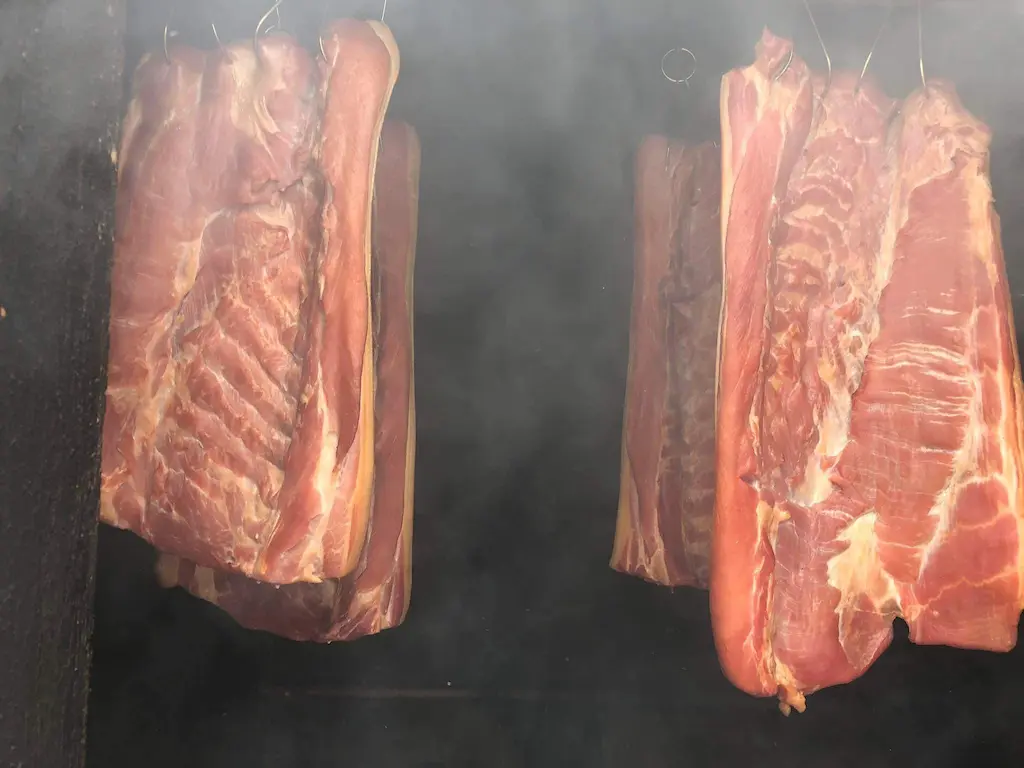
Home-Smoked Bacon: Seven Days of Cure, Eight Hours of Smoke
We dry-cure pork for seven days, smoke it for eight hours over a carefully selected woodchip blend, then vacuum-pack and freeze our homemade bacon.
Read the story →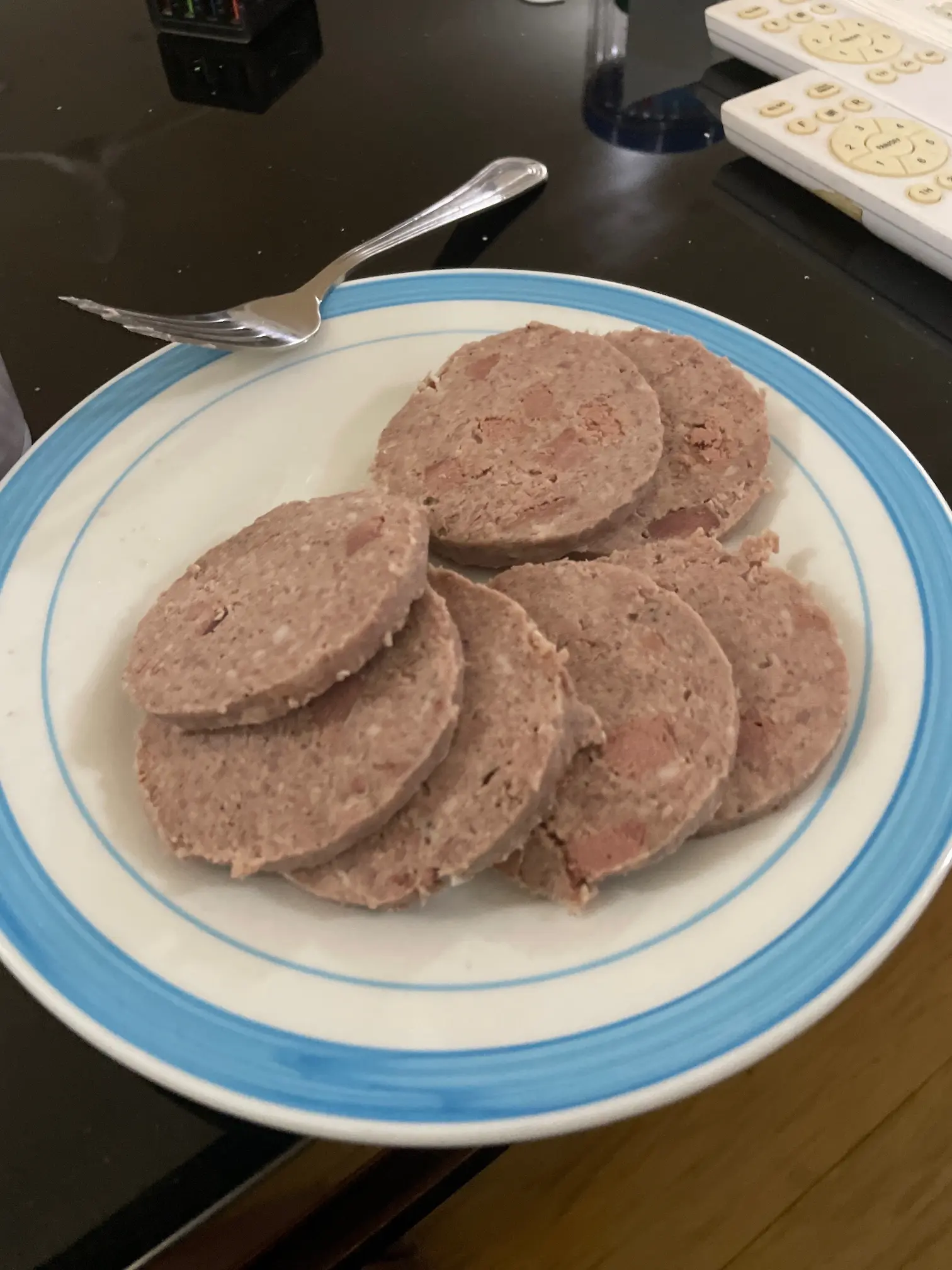
Old-School Liverwurst and the Taste of Memory
A 200-year-old Groningen family recipe brought to Cebu: homemade liverwurst, traditional food skills, and a taste of Dutch family history.
Read the story →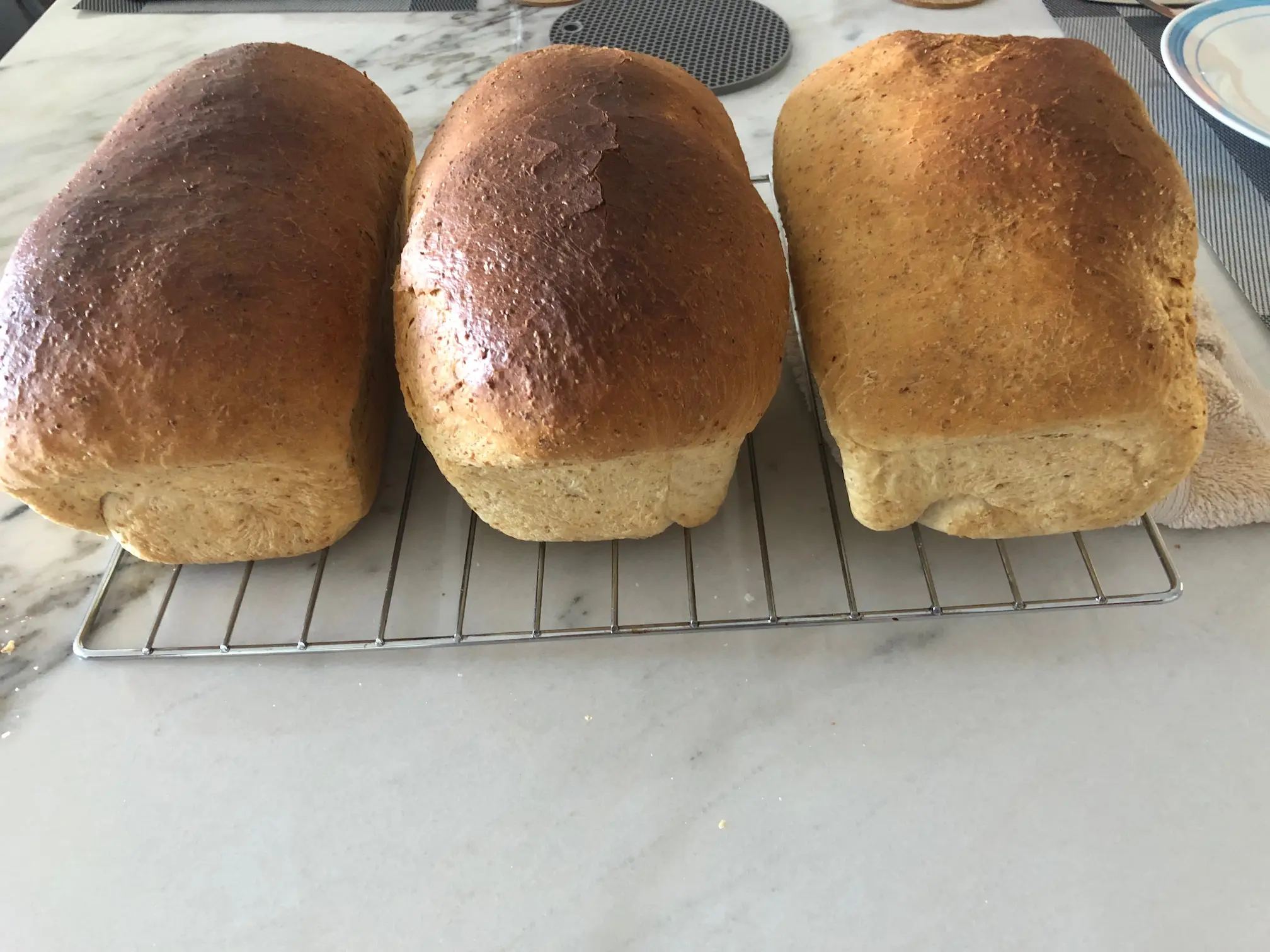
Bread That Goes Stale in Two Days, and Why That's Good
Our homemade bread goes stale after two days because it is baked for flavor and nourishment, not engineered for an unnaturally long shelf life.
Read the story →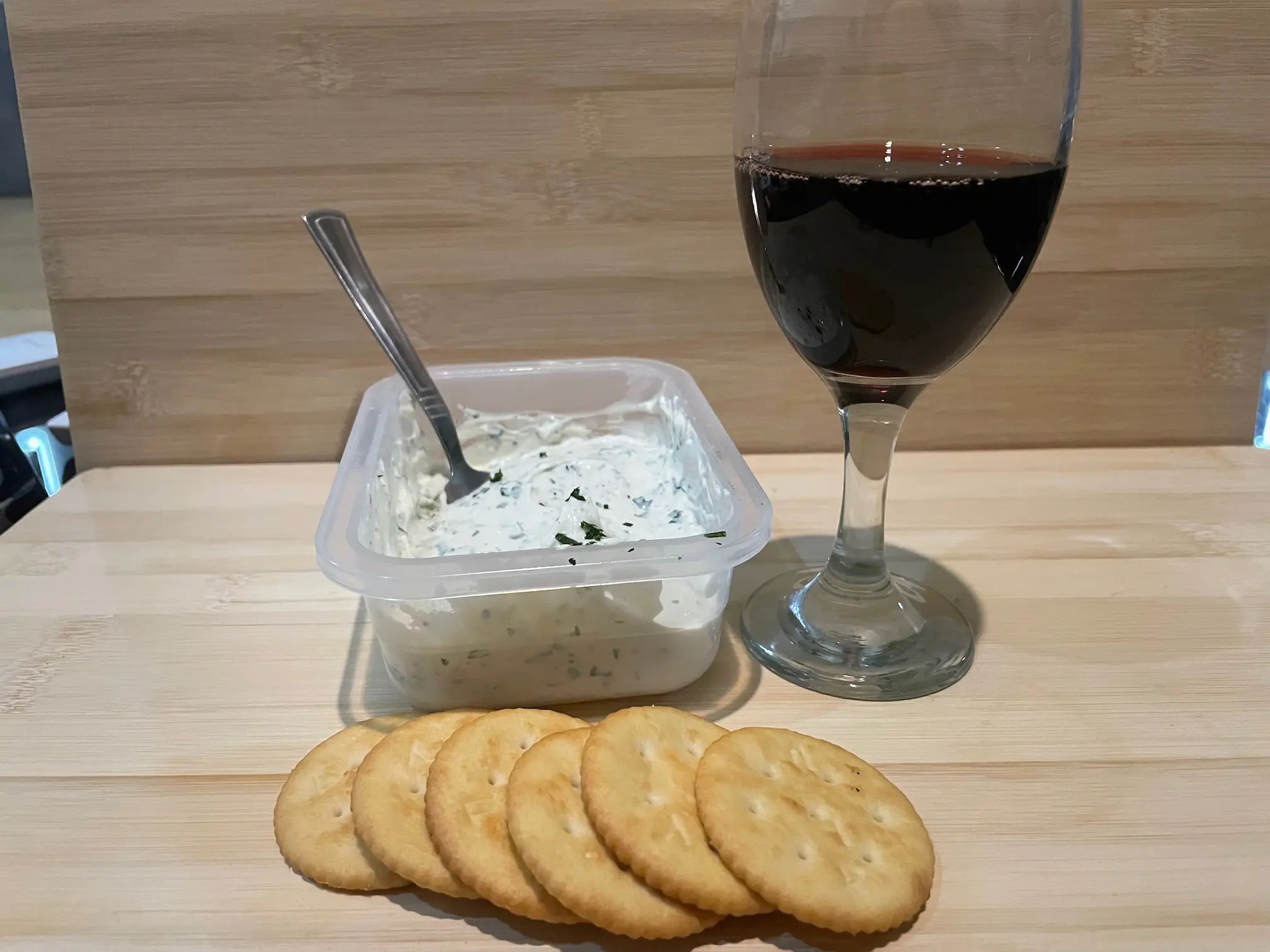
Homemade Labne From Goat Milk at De Klomp Homestead
We made fresh Labne from our own goat milk at De Klomp Homestead, served with parsley and garlic as part of our journey into homemade dairy.
Read the story →Keep exploring De Klomp
More stories from the homestead
More honest lessons from goats, gardens, bread, and daily life on the land.